Tablet of the Two Calls

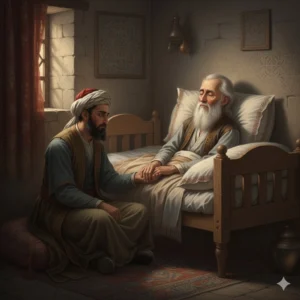
Abdu'l-Baha with Shoghi Effendi.

From section 225 of Selections from the Writings of Abdu’l-Baha:

Can any power withstand the

penetrative influence of the Word of God? Nay, by God!

The proof is clear and the evidence is complete!

If anyone looketh with the eyes of justice he shall be struck with wonder and amazement and will testify that all the peoples, sects and races of the world

should be glad, content and grateful for the teachings and admonitions of Bahá’u’lláh.

For these divine injunctions tame every ferocious beast,

transform the creeping insect into a soaring bird, cause human souls to become angels of the Kingdom, and make the human world a focus for the qualities of mercy.

Posted in Blog | Tagged , | Leave a comment

The Pristine Approach to Baha’u’llah | Muhammad Hadi

3 minutes read time.

Who Was Muhammad Hadi?

There was this interesting man from Isfahan, Persia, by the name of Muhammad Hadi, who was a master bookbinder by trade. I was not able to find any of his work, but it may have looked something like this illumined tablet of Baha’u’llah’s writing, pictured below, which I found on https://bahaisacredrelics.blogspot.com/:

An-Illumined-Tablet-in-the-handwriting-of-Bahaullah-1.webp

We are not told much about this man aside from his spiritual qualities of humility, devotion, and incredible faith. Yet, some other things can probably be assumed due to his trade and his ability to get himself across 1000 miles of a dangerous continent. A person such as this would probably not only be a very thoughtful, meticulous, and patient craftsman but would also have high degrees of endurance, adaptability, courage, and focus.

Hadi at work in Isfahan.

A Deadly Journey

Sometime after Baha’u’llah’s imprisonment at Akka in 1868, Muhammad Hadi travelled there to be close to Baha’u’llah.

Hadi prepares for the journey.

At this time, it would have been a harrowing months-long trip of around 1500 total miles due to having to find survival sources such as water, shelter, supplies, etc. Lack of these things would mean certain death.

All this while avoiding dangerous geographical conditions and predation by humans and animals.

The danger of wild animals, everything from wolves and bears in the mountains to scorpions and snakes in the deserts, not to mention the accompanying dangerous temperatures of the bitter cold in the mountains, such as the ones Baha’u’llah and His family crossed, or the high heat of the deserts, such as the Syrian Desert.

Hadi traveling through mtns. and deserts.

Add to this the organised trade route and tribal banditry made possible by the lack of police power of enormous empires such as those of the Persian or the Ottoman.

Add to all this the “crime” of being a follower of Baha’u’llah during a time of extreme persecution of Baha’is.

He probably carried a sturdy staff of some kind to aid in walking or to test the ground before stepping on it, or for protection from wolves, etc.

Miraculously Arriving at Akka

When he finally arrived at Akka, he was imprisoned with his beloved Baha’u’llah.

Hadi now in Akka.

His Devoted Service

One of the things he did while there was that he took it upon himself to maintain the physical approach to Baha’u’llah.

Hadi sweeping the courtyard.

Every detail, from a speck of dust to the watering down of the area, would have been done with the same care one would expect from a master bookbinder.

Hadi watering the courtyard.

Baháʼu’lláh noticed his dedication and work, saying, “Muhammad-Hadi has turned the square in front of this prison into the bridalbower of a palace.”

Still The Master Bookbinder

Muhammad Hadi also continued his master craft of bookbinding. After taking care of the courtyard, he would apply his masterful craftsmanship to various books and tablets.

Hadi bookbinding in Akka.

A mysterious Illness

Muhammad-Hadi suffered from a chronic disease that eventually claimed his life.

One day, a fellow believer found him burning up with an extreme fever, measured at 107.6 °F (42 ℃), constituting an emergency that took his life.

‘Abdu’l-Bahá, also in Akka at the time, would have seen to it that Muhammad Hadi received a proper burial and also remembered him in Memorials of the Faithful.

Unfortunately, Baha’u’llah and Abdu’l-Baha were unlikely to have attended Muhammad’s funeral personally, as the Baha’i cemetery was located outside of Akka near Bahji, and their movements at the time were still heavily restricted.

Hadi finds rest with a friend.

This account, found in Memorials of the Faithful, is just one of many inspiring stories of the wonderful believers in Baha’u’llah.

I worked with Gemini and Suno AI to create this song in remembrance of Muhammad Hadi:

Posted in Abdu'l-Baha, Baha'i, Baha'i Teachings, Baha'u'llah, Bahá’í Faith | Tagged , , , | Leave a comment

From Thorns to Rose-Gardens: Bahá’u’lláh’s Invitation to Celestial Glory

Birds flying to heaven.
Release yourselves, O nightingales of God, from the thorns and brambles of wretchedness and misery, and wing your flight to the rose-garden of unfading splendor. O My friends that dwell upon the dust! Haste forth unto your celestial habitation. Announce unto yourselves the joyful tidings: “He Who is the Best-Beloved is come! He hath crowned Himself with the glory of God’s Revelation, and hath unlocked to the face of men the doors of His ancient Paradise.” Let all eyes rejoice, and let every ear be gladdened, for now is the time to gaze on His beauty, now is the fit time to hearken to His voice. Proclaim unto every longing lover: “Behold, your Well-Beloved hath come among men!” and to the messengers of the Monarch of love impart the tidings: “Lo, the Adored One hath appeared arrayed in the fullness of His glory!” O lovers of His beauty! Turn the anguish of your separation from Him into the joy of an everlasting reunion, and let the sweetness of His presence dissolve the bitterness of your remoteness from His court.
Behold how the manifold grace of God, which is being showered from the clouds of Divine glory, hath, in this day, encompassed the world. For whereas in days past every lover besought and searched after his Beloved, it is the Beloved Himself Who now is calling His lovers and is inviting them to attain His presence. Take heed lest ye forfeit so precious a favor; beware lest ye belittle so remarkable a token of His grace. Abandon not the incorruptible benefits, and be not content with that which perisheth. Lift up the veil that obscureth your vision, and dispel the darkness with which it is enveloped, that ye may gaze on the naked beauty of the Beloved’s face, may behold that which no eye hath beheld, and hear that which no ear hath heard.
Hear Me, ye mortal birds! In the Rose Garden of changeless splendor a Flower hath begun to bloom, compared to which every other flower is but a thorn, and before the brightness of Whose glory the very essence of beauty must pale and wither. Arise, therefore, and, with the whole enthusiasm of your hearts, with all the eagerness of your souls, the full fervor of your will, and the concentrated efforts of your entire being, strive to attain the paradise of His presence, and endeavor to inhale the fragrance of the incorruptible Flower, to breathe the sweet savors of holiness, and to obtain a portion of this perfume of celestial glory. Whoso followeth this counsel will break his chains asunder, will taste the abandonment of enraptured love, will attain unto his heart’s desire, and will surrender his soul into the hands of his Beloved. Bursting through his cage, he will, even as the bird of the spirit, wing his flight to his holy and everlasting nest.
Night hath succeeded day, and day hath succeeded night, and the hours and moments of your lives have come and gone, and yet none of you hath, for one instant, consented to detach himself from that which perisheth. Bestir yourselves, that the brief moments that are still yours may not be dissipated and lost. Even as the swiftness of lightning your days shall pass, and your bodies shall be laid to rest beneath a canopy of dust. What can ye then achieve? How can ye atone for your past failure?
The everlasting Candle shineth in its naked glory. Behold how it hath consumed every mortal veil. O ye moth-like lovers of His light! Brave every danger, and consecrate your souls to its consuming flame. O ye that thirst after Him! Strip yourselves of every earthly affection, and hasten to embrace your Beloved. With a zest that none can equal make haste to attain unto Him. The Flower, thus far hidden from the sight of men, is unveiled to your eyes. In the open radiance of His glory He standeth before you. His voice summoneth all the holy and sanctified beings to come and be united with Him. Happy is he that turneth thereunto; well is it with him that hath attained, and gazed on the light of so wondrous a countenance. Baha’u’llah, Gleanings, 151
Posted in Baha'i, Baha'i Teachings, Baha'u'llah | Tagged , , | Leave a comment

The Surrendering of Wills

By self-surrender and perpetual union with God is meant that men should merge their will wholly in the Will of God, and regard their desires as utter nothingness beside His Purpose.

Bahá’u’lláh

Posted in Baha'i, Baha'i Teachings, Baha'u'llah, Bahá’í Faith, Blog | Tagged , , | Leave a comment

O Son of the Supreme!

Posted in Baha'i, Baha'u'llah, Blog | Tagged , , | Leave a comment

The Ladder of Virtue: Your Scriptural Guide to Freedom from Earthly Attachments

In this Gemini Storybook, a young woman finds a path to spiritual freedom through higher forms of consciousness.

A woman in seated meditation.

Long ago, in a land touched by mist and shadowed hills, lived a young seeker named Elara. She often felt a quiet ache in her heart, a feeling that something important was missing. Elara would sit on cold, hard stones, gazing at the confusing paths stretching out before her, wondering which way to go. She felt a bit lost, as if she were asleep even when her eyes were open.

One evening, as twilight painted the sky in soft blues, Elara closed her eyes and prayed for guidance. In her heart, a wonderful vision bloomed! From the very spot where she sat, a shimmering Ladder of Light rose, reaching up, up, up into the starry heavens! Its steps glowed with a gentle, inviting warmth.

As Elara watched, she saw that each step of the Ladder wasn’t just wood or light, but a sparkling jewel! Each jewel had a special name etched upon it: Kindness, Truthfulness, Generosity, Patience, Justice, Courage. Elara understood these were the precious Rungs of Virtue, and to climb, she would need to polish each one with her deeds.

And look! On the Ladder, bright, gentle Angels of Light danced and glided! Some flew gracefully upwards, others descended with soft smiles. They weren’t just pretty to look at; they shared whispers of wisdom and pointed to the next shining rung. Elara knew they were there to guide her, not to carry her.

Taking a deep breath, Elara put her foot on the first rung. It felt strong! But soon, little shadowy whispers tried to pull her down. “Stay here, it’s easier!” they hissed. “Take this shiny, tempting pebble!” But Elara remembered the Ladder’s light. Each moment was a choice: to reach for a jewel-rung, or to let the shadows pull her back. It was her decision.

Below the Ladder, Elara saw a heap of glittering but empty things: a crown made of boasts, a cup overflowing with selfish wants, a tangled net of anger. These were the False Riches that looked appealing but held no true joy. She realized that holding onto them would only make her too heavy to climb. She chose to leave them behind.

Higher and higher Elara climbed. The Ladder felt sturdy, but the space around her seemed to narrow. This meant she had to be more careful, more mindful of each step. There was less room for distraction, and more need for focus. But with each rung she polished, her heart grew lighter, and her steps became surer.

Finally, Elara reached the very top! Oh, what a sight! The entire sky above glowed with a brilliant, golden Light – a warmth that filled her with boundless peace and understanding. From this Summit of Illumination, she could see all the paths she had left behind, and the beautiful harmony of the entire world below. All confusion melted away in the glorious light.

But the journey wasn’t over. The loving Light whispered: “Now, share your light.” So, Elara began to gently descend the Ladder, her heart full of the wisdom she had gained. She looked for others still lost in the shadowy paths, eager to share the secret of the Ladder and offer a helping hand. She became an Angel of Light herself, guiding others.

Back on the ground, the Ladder of Light remained, shimmering gently. Elara found a smooth, strong stone and placed it upright, a Pillar of Remembrance. Every morning, she would visit her pillar, remembering her vision, polishing her virtues, and offering her services to the world. And so, the Ladder of Light continued to guide many hearts, step by shining step.

Posted in Religion, Spiritual Truths, Symbolism | Tagged | Leave a comment

To The Eternal I Call Thee

"O Son of the Supreme! 

To the eternal I call thee, yet thou dost seek that which perisheth. 

What hath made thee turn away from Our desire and seek thine own?"

“O Son of the Supreme!

To the eternal I call thee, yet thou dost seek that which perisheth.

What hath made thee turn away from Our desire and seek thine own?”

The Hidden Words of Baha’u’llah

Posted in Baha'i, Baha'u'llah | Tagged , , , , | 1 Comment

The Illumination of the Holy Spirit

Posted in Baha'i Teachings, Baha'u'llah, Bahá’í Faith | Tagged , , , | Leave a comment

Clear the Path: A Snapshot of Overcoming Ego with Baháʼí Principles


The Duality

Read time 4 minutes.

Link to Parable of the Wheat and the Tares

I think the parable of the wheat and the tares might be connected to this idea of ego and the animal nature. The idea is to eventually overcome the animal nature and separate from it with the ultimate separation being death when the spirit of a person moves on while the animal nature, that stems from the physical body, goes back to the elements.

*The following is an outline by Gemini created from the quotes found on the Baha’i Quotes website concerning the ego.

The Concept of Ego in the Baháʼí Faith

I. Defining the Ego: Two Natures of Man

  • The Lower/Material Nature (The “Ego” or “Self” to struggle against):
    • Symbolized as Satan, the subtle serpent, or the Tempter within (1)
    • Leads to wickedness, lust, carnal desires, sin, and error (2)
    • Manifests as anger, passion, ignorance, prejudice, greed, envy, covetousness, jealousy, suspicion (3)
    • Causes attachment to the “Kingdom of Names” (fame, recognition, worldly accomplishments) (4)
    • Imprisons man in self, changes him into an animal, unable to distinguish good from evil (5)
    • The “animal in us, the heritage of the flesh which is full of selfish desires” (6)
    • Prevents spiritual ascent and can imperil spiritual life (7)
    • Its complete elimination implies perfection, which man cannot fully attain, but it can be increasingly subordinated (8)
  • The Higher/Spiritual Nature (The “Self” to know and cultivate):
    • Approaches God, expresses truth, love, mercy, kindness, and justice (9)
    • “He hath known God who hath known himself etc.” (10)
    • Consulting the “higher self” or “spirit” within for guidance (11)
    • Leads to piety and the fear of God (12)
    • Associated with virtues like humility, self-effacement, detachment, and service to others (13)
    • The “Lord of Love” shining in the hearts, leading to self-forgetting in service (14)

II. Manifestations and Consequences of Ego

  • Selfishness and Personal Ambition:
    • Following promptings of the self leads to wickedness and lust (15)
    • Seeking leadership through stratagems and instilling doubts (16)
    • Neglecting duties for selfish aims, taking extortion (17)
    • Caring for oneself only is an “animal propensity” (18)
    • Occupied with oneself leads to heedlessness and regret (19)
    • Ambitious nature and lack of spirituality blinded family members of Baháʼu’lláh (20)
    • Human society often trains individuals to develop ego and seek self-importance, success, and power (21)
  • Attachment to the Kingdom of Names:
    • Taking pride in accomplishments, seeking fame and popularity (22)
    • Attributing God’s attributes (like generosity or knowledge) to oneself rather than God, boosting one’s ego (23)
    • Being pleased by praise and offended by criticism (24)
    • Failure to subdue ego leads to loss of faith, goodness, and virtue (25)
    • The “most difficult task for a Baháʼí,” potentially lasting a lifetime (26)
  • Hindrance to Spiritual Progress:
    • Prevents man from ascending to realms of holiness (27)
    • Keeps one a captive of habit and desire (28)
    • The ego is a “veil” between man and God (29)
    • Makes tests more difficult as one draws closer to the Manifestation (30)
    • Prevents true appreciation of the Word of God and His Covenant (31)
    • Hinders the flow of divine bounties (32)

III. Overcoming the Ego

  • Subduing the Ego through Divine Guidance:
    • Consuming egotistical veils with the “fire of oneness” for the sake of God (33)
    • Following “Him Who is the Possessor of all created things” (34)
    • Repentance and return to God (35)
    • Obeying the laws of God, living the Baháʼí teachings, prayer, and struggle (36)
    • Renouncing oneself, forgetting opinions, casting aside personalities, and thinking of others’ welfare (37)
    • “Self-forgetting” is the “Master Key’ to self-mastery” (38)
  • Cultivating Virtues and Qualities:
    • Piety and fear of God (39)
    • Humility and self-effacement (40)
    • Justice, mercy, kindness, willingness to accept hardships for others (41)
    • Detachment from earthly things, passion, desire, and self-glory (42)
    • Fidelity, integrity, unwavering faith in God (43)
    • In consultation, manifesting love, unity, detachment, harmony, devotion, courtesy, patience (44)
  • The Continuous Struggle:
    • Life is a “constant struggle” against our own ego (45)
    • Spiritual progress implies “ever-increasingly subordinating” the ego (46)
    • The “battle within the soul” continues as long as the ego dictates (47)
    • Saints have achieved the “highest degree of mastery over their ego” (48)
    • Realizing that virtues are manifestations of God’s attributes, not intrinsically one’s own (49)
    • Not being discouraged by undue criticism or pleased with praise (50)

IV. Examples of Ego Overcome

  • Disciples during the Days of Baghdad:
    • Demonstrated utter nothingness, forgot their own names, their hearts emptied of aught else but adoration for Baháʼu’lláh (51)
    • Became “spiritual giants” and shed imperishable luster on the Cause of God (52)

Footnotes

  1. Abdu'l-Bahá, *Bahá’í Scriptures*, p. 487;Abdu’l-Bahá, The Promulgation of Universal Peace, p. 286; Shoghi Effendi, Lights of Guidance, p. 513
  2. Baháʼu’lláh, The Kitáb-i-Aqdas, p. 41; Baháʼu’lláh, Bahá’í World Faith, p. 184
  3. `Abdu’l-Bahá, Bahá’í Scriptures, p. 241
  4. Adib Taherzadeh, The Covenant of Bahá’u’lláh, p. 25; Adib Taherzadeh, The Revelation of Bahá’u’lláh v2, p. 39
  5. `Abdu’l-Bahá, Divine Philosophy, p. 133-134
  6. Shoghi Effendi, Lights of Guidance, p. 113
  7. `Abdu’l-Bahá, Bahá’í Scriptures, p. 241; Adib Taherzadeh, The Revelation of Bahá’u’lláh v1, p. 129
  8. Shoghi Effendi, Living the Life, p. 11
  9. `Abdu’l-Bahá, Paris Talks, p. 60
  10. Shoghi Effendi, Lights of Guidance, p. 113
  11. Abdu'l-Bahá, *Paris Talks*, p. 179;Abdu’l-Bahá, The Promulgation of Universal Peace, p. 242
  12. Baháʼu’lláh, The Kitáb-i-Aqdas, p. 41
  13. `Abdu’l-Bahá, Lights of Guidance, p. 114; Adib Taherzadeh, The Covenant of Bahá’u’lláh, p. 22
  14. Mundaka Upanishad, Eknath Easwaran Translation, Part III, 1-5
  15. Baháʼu’lláh, The Kitáb-i-Aqdas, p. 41
  16. `Abdu’l-Bahá, Selections from the Writings of ‘Abdu’l-Bahá, p. 214
  17. `Abdu’l-Bahá, Tablets of ‘Abdu’l-Bahá v2, p. 403
  18. `Abdu’l-Bahá, Foundations of World Unity, p. 41
  19. `Abdu’l-Bahá, Lights of Guidance, p. 114
  20. Adib Taherzadeh, The Child of the Covenant, p. 26-27
  21. Adib Taherzadeh, The Covenant of Bahá’u’lláh, p. 22; Adib Taherzadeh, The Revelation of Bahá’u’lláh v2, p. 39
  22. Adib Taherzadeh, The Covenant of Bahá’u’lláh, p. 25; Adib Taherzadeh, The Revelation of Bahá’u’lláh v2, p. 39
  23. Adib Taherzadeh, The Covenant of Bahá’u’lláh, p. 25; Adib Taherzadeh, The Revelation of Bahá’u’lláh v2, p. 39
  24. Adib Taherzadeh, The Revelation of Bahá’u’lláh v2, p. 189
  25. Adib Taherzadeh, The Revelation of Bahá’u’lláh v2, p. 264
  26. Adib Taherzadeh, The Revelation of Bahá’u’lláh v2, p. 41; Adib Taherzadeh, The Covenant of Bahá’u’lláh, p. 28
  27. `Abdu’l-Bahá, Bahá’í Scriptures, p. 241
  28. `Abdu’l-Bahá, Divine Philosophy, p. 133-134
  29. Adib Taherzadeh, The Revelation of Bahá’u’lláh v2, p. 43
  30. Adib Taherzadeh, The Revelation of Bahá’u’lláh v1, p. 129
  31. Adib Taherzadeh, The Revelation of Bahá’u’lláh v1, p. 129
  32. Adib Taherzadeh, The Revelation of Bahá’u’lláh v2, p. 43
  33. Baháʼu’lláh, Bahá’í Scriptures, p. 134
  34. Baháʼu’lláh, The Kitáb-i-Aqdas, p. 41
  35. Baháʼu’lláh, Bahá’í World Faith, p. 184
  36. Shoghi Effendi, Unfolding Destiny, p. 453; Shoghi Effendi, Lights of Guidance, p. 113
  37. `Abdu’l-Bahá, Lights of Guidance, p. 114
  38. `Abdu’l-Bahá, Lights of Guidance, p. 114
  39. Baháʼu’lláh, The Kitáb-i-Aqdas, p. 41
  40. Adib Taherzadeh, The Covenant of Bahá’u’lláh, p. 22; Adib Taherzadeh, The Revelation of Bahá’u’lláh v2, p. 39
  41. `Abdu’l-Bahá, Foundations of World Unity, p. 41
  42. Adib Taherzadeh, The Revelation of Bahá’u’lláh v2, p. 215
  43. Universal House of Justice, Quickeners of Mankind, p. 119
  44. Adib Taherzadeh, The Child of the Covenant, p. 36-37
  45. Shoghi Effendi, Lights of Guidance, p. 113
  46. Shoghi Effendi, Living the Life, p. 11
  47. Adib Taherzadeh, The Child of the Covenant, p. 36-37
  48. Shoghi Effendi, Unfolding Destiny, p. 453; Shoghi Effendi, Lights of Guidance, p. 113
  49. Adib Taherzadeh, The Revelation of Bahá’u’lláh v2, p. 41; Adib Taherzadeh, The Covenant of Bahá’u’lláh, p. 28
  50. Adib Taherzadeh, The Revelation of Bahá’u’lláh v2, p. 189
  51. Adib Taherzadeh, The Revelation of Bahá’u’lláh v2, p. 214-216
  52. Adib Taherzadeh, The Revelation of Bahá’u’lláh v2, p. 214

Matthew 13: 24-30

24 Another parable He put forth to them, saying: “The kingdom of heaven is like a man who sowed good seed in his field; 25 but while men slept, his enemy came and sowed tares among the wheat and went his way. 26 But when the grain had sprouted and produced a crop, then the tares also appeared. 27 So the servants of the owner came and said to him, ‘Sir, did you not sow good seed in your field? How then does it have tares?’ 28 He said to them, ‘An enemy has done this.’ The servants said to him, ‘Do you want us then to go and gather them up?’ 29 But he said, ‘No, lest while you gather up the tares you also uproot the wheat with them. 30 Let both grow together until the harvest, and at the time of harvest I will say to the reapers, “First gather together the tares and bind them in bundles to burn them, but gather the wheat into my barn.” ’ ”

Posted in Baha'i Teachings, Bahá’í Faith, Psychology, Religion | Tagged , , , , , , , , , , , , , , , | Leave a comment

Finding Personal Peace

Renouncing myself.

From the Hidden Words:

8. O SON OF SPIRIT!
There is no peace for thee save by renouncing thyself and turning unto Me; for it behooveth thee to glory in My name, not in thine own; to put thy trust in Me and not in thyself, since I desire to be loved alone and above all that is. – Baha’u’llah

38. O SON OF SPIRIT! Burst thy cage asunder, and even as the phoenix of love soar into the firmament of holiness. Renounce thyself and, filled with the spirit of mercy, abide in the realm of celestial sanctity. – Baha’u’llah

These seem to be identity-related instructions similar to the one in the story of the Rich Young Man from the Bible.

Posted in Baha'i, Baha'i Teachings, Baha'u'llah, christianity, Jesus, Religion | Tagged , , , , , , , , , , , , , , , , , | Leave a comment